
Senior downsizing Safety Harbor FL services help older adults and families prepare for a move with less stress and a clear plan for the belongings accumulated over many years. Whether you are moving to a smaller home, condominium, independent living community, assisted living residence, or closer to family, downsizing can involve much more than packing boxes. It often means deciding what to keep, what to give to family, what may be sold, and what should be donated or otherwise removed from the home.
We help Safety Harbor families approach this transition in an organized and practical way. From evaluating household contents and identifying items that may have resale value to determining whether an estate sale or broader liquidation is appropriate, the goal is to make the downsizing process more manageable while helping you make informed decisions about the home and its contents.
Planning a move or helping a parent downsize? Start with a free consultation to discuss the home, your timeline, and the next steps.
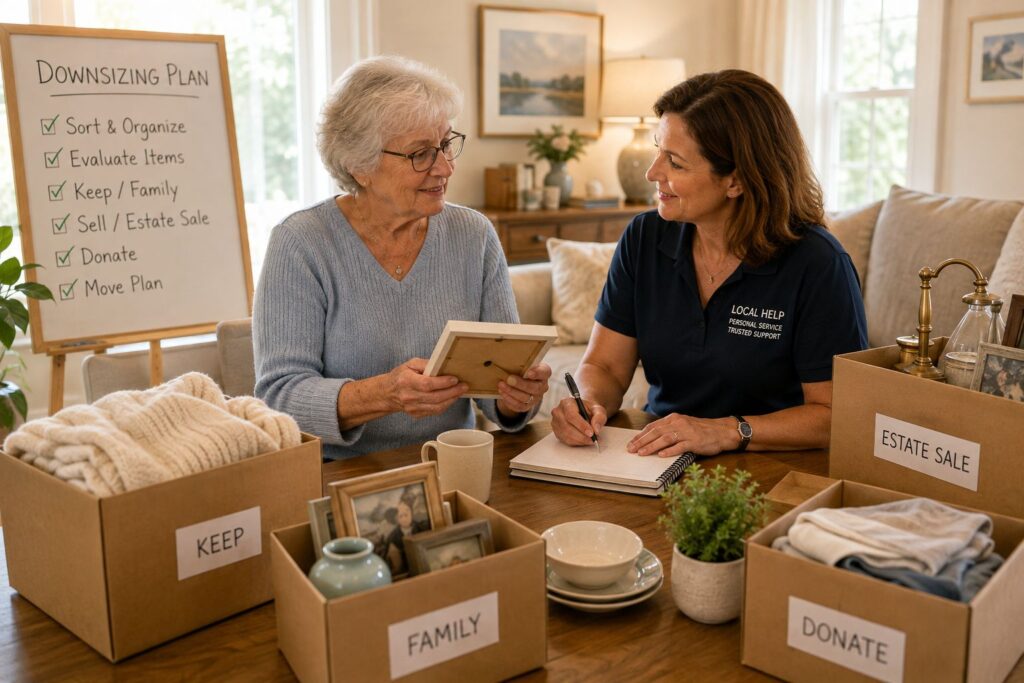
Table of Contents
Senior Downsizing Safety Harbor FL Services for Local Families
Downsizing a longtime home can be both a practical project and a significant family transition. Many Safety Harbor homeowners have accumulated furniture, collectibles, household goods, photographs, keepsakes, clothing, kitchenware, décor, tools, and other possessions over decades. When the next home has considerably less space, deciding what will move and what will remain can quickly become overwhelming.
For families considering senior downsizing Safety Harbor FL services, starting early can make it easier to evaluate belongings and develop a practical plan before moving day.
Senior downsizing services provide a structured way to work through those decisions. Instead of treating the move as one enormous project, the household can be approached in stages—identifying priority belongings, separating sentimental or family items, evaluating potentially valuable contents, and developing a plan for possessions that will not be moving to the new residence.
For families assisting parents or relatives, this organization can be especially important when they live outside Safety Harbor or have limited time available to manage the transition. A clear plan helps everyone understand what needs to happen before the property can be emptied, prepared, or eventually placed on the market.
When Downsizing & Senior Move Services May Be Needed
Families consider downsizing and senior move services for many different reasons. Some moves are planned well in advance, while others happen quickly because of a change in housing, family circumstances, or the need for additional support. In each situation, reducing the contents of a longtime home before the move can make the transition easier to manage.
Moving to a Smaller Home or Condo
Moving from a longtime home to a smaller house, condominium, or apartment often means there will not be enough space for every piece of furniture and household item. A downsizing plan helps identify what should move to the new residence, what may be passed to family, what could potentially be sold, and what can be donated or otherwise removed.
Moving to Independent or Assisted Living
A move to an independent living, assisted living, or senior living community often requires a significant reduction in household belongings. Families may need to determine which furniture, personal items, photographs, keepsakes, and everyday necessities will fit comfortably in the new residence while developing a plan for everything that remains in the home.
Helping a Parent Downsize
Adult children often become involved when a parent is preparing to leave a longtime home. The process may include sorting decades of belongings, identifying sentimental and family items, evaluating possessions that may have resale value, and deciding what should be donated or removed. An organized downsizing plan can help families make these decisions systematically while preparing the property for its next stage.
Relocating to Be Closer to Family
Seniors relocating to another city or state to be closer to children, grandchildren, or other family members may need to substantially reduce the contents of their current home before moving. Planning ahead helps separate the belongings that will make the move from furniture, collectibles, household goods, and other items that may need to be sold, donated, or otherwise removed.
Preparing a Home for Sale
Downsizing is often part of preparing a longtime home for sale. Once the belongings that will move with the homeowner have been identified, the remaining furniture, collectibles, household goods, and other possessions need an appropriate plan. Depending on the quantity and potential resale value of the contents, an estate sale or broader estate liquidation may help clear the property while recovering value from marketable items.
How the Senior Downsizing Process Works
A successful downsizing project becomes much easier when the work is divided into clear stages. Rather than trying to make decisions about an entire household at once, families can work through the home systematically, identify priorities, and create a plan for belongings that will move, stay with family, be sold, donated, or otherwise removed.
1. Initial Consultation and Downsizing Assessment
The process begins with a conversation about the property, upcoming move, timeline, and amount of household contents involved. This initial assessment helps identify the family’s priorities, areas that may require the most attention, and whether additional services such as an estate sale or estate liquidation may be appropriate for belongings that will not move to the new residence.
2. Identify What Will Move to the New Home
Before deciding what to sell or remove, it is important to identify the belongings that will move to the new residence. Available space, storage, room dimensions, lifestyle needs, and sentimental value can all influence these decisions. Setting aside essential furniture, personal belongings, important documents, photographs, keepsakes, and everyday necessities first creates a clearer picture of what will remain in the home.
3. Separate Family and Sentimental Items
Items intended for children, grandchildren, relatives, or close friends should be identified before the remaining household contents are evaluated. Family photographs, documents, heirlooms, jewelry, keepsakes, and other sentimental belongings can be separated and clearly designated so they are not accidentally included with items intended for sale, donation, or removal.
4. Evaluate Remaining Household Contents
Once the belongings that will move or remain with family have been separated, the remaining contents can be reviewed. Furniture, collectibles, artwork, décor, kitchenware, tools, jewelry, household goods, and other items may have resale value. Evaluating the quantity, condition, and potential marketability of these belongings helps determine the most practical next step.
5. Determine What Can Be Sold, Donated, or Removed
Not every item requires the same solution. Some belongings may be appropriate for resale, while others may be better suited for donation or removal. Creating clear categories helps prevent the downsizing process from becoming an endless series of individual decisions and provides a practical plan for clearing the remaining contents of the home. Our senior downsizing Safety Harbor FL approach can also help families determine which household items may be appropriate for an estate sale, donation, family distribution, or removal.
6. Consider an Estate Sale or Estate Liquidation
When a home contains a substantial amount of furniture, collectibles, décor, household goods, tools, or other marketable belongings, selling items individually may not be practical. In these situations, an estate sale or professional estate liquidation can provide a more organized approach to selling the remaining contents while preparing the property for the next stage.
7. Prepare the Property for the Next Stage
After the belongings that will move, remain with family, be sold, donated, or removed have been addressed, the property is much easier to prepare for its next purpose. Depending on the family’s situation, that may mean listing the home for sale, transferring ownership, completing an estate settlement, or simply leaving the property cleared and organized after the senior has moved.
Sorting a Lifetime of Belongings
One of the most challenging parts of senior downsizing is deciding what to do with belongings accumulated over many years. Furniture, photographs, family keepsakes, collectibles, clothing, kitchenware, books, tools, décor, and everyday household items can quickly make the project feel overwhelming. A simple sorting system helps families make decisions in manageable stages instead of trying to address the entire household at once.
Keep and Move to the New Home
Start with the belongings that are essential for the new residence. Consider available space, storage, daily routines, furniture dimensions, and which personal possessions are most meaningful. Prioritizing what will move first helps establish realistic limits for everything else.
Give to Family or Preserve as Keepsakes
Photographs, documents, heirlooms, jewelry, artwork, and sentimental possessions may be important to children, grandchildren, or other relatives. Separating these items early protects them from accidentally being included with belongings intended for sale, donation, or removal.
Sell Items With Resale Value
Furniture, collectibles, jewelry, artwork, tools, décor, vintage items, and other household contents may have resale value depending on their condition and current market demand. When a substantial quantity of marketable belongings remains, an organized estate sale or estate liquidation may be more practical than attempting to sell items individually.
Donate Useful Items
Items that are still usable but may not justify the time or expense involved in selling them can often be donated. Clothing, household goods, books, furniture, and other appropriate belongings may be useful to local charitable organizations rather than being discarded.
Remove Items That Cannot Be Reused
Some belongings may have little resale value and may not be suitable for donation. Identifying these items separately allows the family to develop an appropriate removal plan without mixing them with possessions that should be kept, transferred to relatives, sold, or donated.
What Happens to the Belongings You Don’t Take With You?
After the belongings moving to the new residence and items reserved for family have been identified, many homes still contain furniture, collectibles, décor, kitchenware, tools, and other household contents. The best solution depends on the quantity, condition, potential resale value, available timeline, and the family’s goals. Some homes may benefit from an estate sale or broader estate liquidation, while others may require a combination of selling, donation, and removal.
For Safety Harbor families with a significant amount of remaining household contents, professional estate liquidation can provide a structured way to evaluate, organize, market, and sell appropriate items while helping prepare the property for its next stage.
Senior Downsizing vs. Estate Liquidation
Senior downsizing and estate liquidation are related services, but they address different needs. Senior downsizing focuses primarily on helping an older adult or family prepare for a transition to a smaller home, condominium, independent living community, assisted living residence, or another location. The process begins with deciding what will move, what will remain with family, and what should happen to the belongings left behind.
Families planning a senior transition may also find helpful local information through Pinellas County’s Age-Friendly Services and Resources.
Estate liquidation focuses more specifically on evaluating, organizing, marketing, and selling a substantial portion of the household contents. It may become part of a downsizing project when the homeowner has more marketable belongings than can reasonably be moved, given to family, or sold individually.
When Downsizing May Be Enough
If most belongings will move to the new residence or be distributed among family members, the primary need may simply be organization and downsizing. Remaining items can then be handled through an appropriate combination of selling, donation, or removal.
When Estate Liquidation May Be Appropriate
When a home contains a significant amount of furniture, collectibles, artwork, décor, jewelry, tools, household goods, or other potentially marketable contents, a more comprehensive liquidation approach may be appropriate. This can help families address a large volume of belongings efficiently while preparing the property for sale, transfer, or another use.
Downsizing and Liquidation Can Work Together
These services do not have to be separate projects. A senior move may begin with downsizing and sorting, followed by estate liquidation for appropriate belongings that will remain in the home. This creates a coordinated transition from deciding what the homeowner will keep to developing a practical plan for everything else.
Senior Downsizing Services for Safety Harbor & Pinellas County Families
Families throughout Safety Harbor and surrounding Pinellas County communities may need downsizing assistance when preparing for retirement living, relocating closer to family, moving to a smaller residence, or transitioning to independent or assisted living. Having a structured plan for the household contents can make these moves considerably easier to manage.
Our senior downsizing services focus on Safety Harbor, Florida, while also supporting families in nearby communities including Clearwater, Palm Harbor, Dunedin, and Oldsmar. Whether the family lives locally or is coordinating a parent’s move from outside the area, the first step is understanding the property, timeline, amount of household contents, and the family’s priorities.
Local Support for Safety Harbor Senior Transitions
Safety Harbor includes longtime single-family homes, condominiums, and established residential communities where homeowners may have accumulated belongings over many years. Moving from one of these homes often requires more planning than a conventional household move because the family must determine not only what will be packed, but what will happen to everything that cannot move to the new residence.
Frequently Asked Questions About Senior Downsizing
When should we start planning a senior downsizing move?
Whenever possible, begin planning before the move becomes urgent. Starting early gives the homeowner and family more time to decide what will move to the new residence, identify sentimental belongings, distribute items to relatives, and determine how remaining household contents should be handled.
How do we decide what to keep when downsizing?
Start with the size and layout of the new residence, everyday needs, and the belongings that are most important to the homeowner. Essential furniture, personal items, important documents, photographs, and meaningful keepsakes should generally be identified before decisions are made about selling, donating, or removing other household contents.
What can we do with furniture and belongings that will not fit in the new home?
The appropriate solution depends on the condition, quantity, potential resale value, and available timeline. Some belongings may be given to family, some may be appropriate for resale or donation, and others may require removal. When a substantial amount of marketable household contents remains, an estate sale or estate liquidation may be appropriate.
Can you help if family members live outside Florida?
Families often need to coordinate a parent’s downsizing or household transition from another city or state. A clear plan for the property, belongings, timeline, and family priorities can make the process easier to manage even when some relatives are not located in Safety Harbor.
Is senior downsizing the same as an estate sale?
No. Senior downsizing focuses on reducing household belongings and preparing for a move or life transition. An estate sale focuses primarily on selling appropriate household contents. An estate sale or estate liquidation may become one part of a larger senior downsizing project when substantial marketable belongings remain in the home.
Do we need to know exactly what we want to sell before requesting a consultation?
No. Families often request a consultation because they are unsure what should be kept, sold, donated, or removed. An initial conversation can help clarify the property, amount of household contents, upcoming move, timeline, and appropriate next steps.
Request a Senior Downsizing Consultation
If you are preparing for a smaller home, senior living community, relocation, or helping a parent manage a longtime household, you do not have to determine every step before getting started. A consultation can help you discuss the property, household contents, timeline, and options for belongings that will not be moving to the new residence.
Request a free consultation to discuss senior downsizing Safety Harbor FL services, your family’s situation, upcoming move, household belongings, and next steps.